How to Organize a Tiny Closet: 12 Ideas That Make Real Room
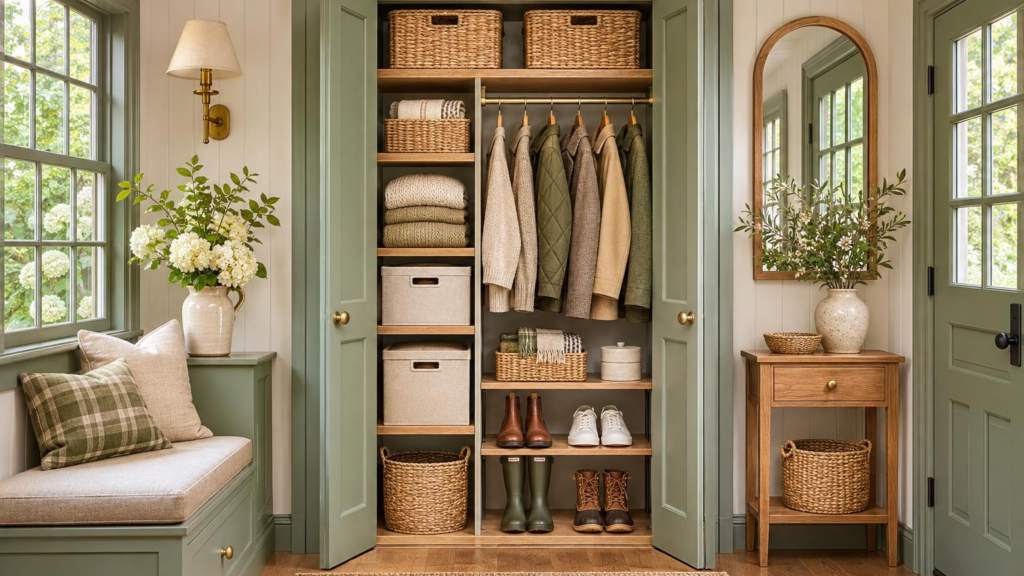
If you're working out how to organize a tiny closet, start with what's in it, not what you could buy. A small closet works when every inch has a job and every piece earns its spot.
Grab a tape measure and a notepad. Write down the width, the depth, the rod height and the height to the ceiling. A standard reach-in closet is about 24 in deep, so most ideas below are about using height and edges better.
In this guide
- Start with the hanger flip
- Double up the hanging rod
- Switch to slim, matching hangers
- Add a second shelf up high
- Divide your shelves
- Fold clothes to stand on edge
- Use the hidden side walls
- Fit drawers under short clothes
- Move off-season clothes under the bed
- Hang shelves from the rod
- Add a light
- Give worn-once clothes a spot
- Picks for your closet & entry
- Questions people ask
Start with the hanger flip
Turn every hanger so the hook faces you. When you wear something and hang it back up, turn that hanger the normal way.
After a season, the backward hangers show you what you don't reach for. In a tiny closet, that's the easiest space you'll ever free up.
Set a reminder for about three months out. Then pull everything still facing backward and decide: donate, sell, or store it with your off-season clothes.
Double up the hanging rod
Most of what you hang is short: shirts, blouses, skirts, folded pants. With one rod at about 66 in, the space under your shirts goes to waste.
A second, lower rod doubles the hanging space for short clothes in that section, without making the closet any wider.
Set the top rod at about 80 in and the lower one at about 40 in. Short pieces need about 38 to 40 in of drop, so measure your longest shirt on its hanger first. Keep one section single for dresses and coats, which need about 60 in or more. A hang-on rod extender works if you can't drill.
Switch to slim, matching hangers
Chunky plastic and wooden hangers eat rod space. Thin, matching hangers fit more clothes in the same width and keep everything at one height.
Even spacing makes each piece easier to see, so you're more likely to wear what you own.
Measure your rod and count your hangers. Swap one section at a time so you can see the difference before you change them all. Felt or flocked finishes help silky tops stay put.
Add a second shelf up high
Many reach-in closets have one shelf above the rod, with open air above it. On an 8 ft ceiling, that's often about 12 in of unused height.
A second shelf, or a stacking shelf set on top of the first, gives you a spot for bags, hats and spare bedding.
Measure from the top of the shelf to the ceiling. With about 12 in, a stacking shelf about 6 in tall gives you two levels. Closet shelves are often about 12 in deep, so keep bins about 11 in deep or less.
Divide your shelves
Folded sweaters and jeans slump into each other on a long shelf. Clip-on shelf dividers make neat columns that stay standing.
Tidy columns let you stack a little higher without toppling, and you can pull out one sweater without wrecking the pile.
Space dividers about 12 in apart for sweaters and about 10 in for jeans or tees. Keep stacks to about 10 to 12 in tall. Any higher and the bottom pieces get crushed and hard to reach.
Fold clothes to stand on edge
Instead of stacking T-shirts flat, fold them into small rectangles and stand them up in a drawer or bin.
You can see every piece from above, nothing gets buried at the bottom, and there's no empty air on top of a short stack.
Fold each piece to the inside height of the drawer, minus about 1 in. For a shallow drawer about 4 to 5 in deep inside, fold small. In a deep bin, fold taller and use a small box as a divider.
Use the hidden side walls
In a reach-in closet, the door opening is often narrower than the closet inside. That leaves short side walls tucked behind the frame on each end.
Those ends are awkward for hanging clothes, but great for hooks, a narrow shelf or a belt and bag rack.
Measure the width of each end wall. With about 6 in or more, a column of hooks fits. Hang the lowest hook at about hip height for bags and the highest at about eye level for belts and scarves.
Fit drawers under short clothes
In a section where short clothes hang from a single rod, the floor below is often open. A small chest or a stack of drawers can live there.
That can move folded clothes out of a bedroom dresser, which frees floor space in the room itself.
Measure from the floor to the hem of the lowest shirt, then subtract about 2 in. That's your height limit. Keep the unit about 20 in deep or less so it sits under the clothes and the door still closes.
Move off-season clothes under the bed
Your closet should hold what you wear now. Heavy sweaters in summer and sundresses in winter can move to under-bed boxes.
That frees rod and shelf space, and swapping twice a year is a natural time to edit.
Measure from the floor to the bottom of the bed frame and choose containers about 1 in shorter. Measure the bed's length, too, so boxes don't stick out. Put a label on the end that faces out.
Hang shelves from the rod
A fabric hanging organizer with cubbies hooks over the rod and turns one stretch of hanging space into shelves.
It helps when you have no dresser, or when you need a spot for knits that stretch out on hangers.
Many are about 12 in wide. Hang it in the single-rod section so it can drop fully, and keep at least about 2 in between the bottom cubby and the floor or anything below it.
Add a light
Tiny closets are often dark, so whatever lands in the back corners gets forgotten. A battery-powered motion-sensor light helps.
When you can see everything, you use what you own and are less likely to buy repeats.
Mount it under the shelf, centered and just behind the front edge, so it shines down on the clothes and not in your eyes. Rechargeable bars with adhesive or magnetic backs come off easily when you move.
Give worn-once clothes a spot
Jeans you'll wear again and a sweater worn for an hour tend to land on a chair. Give them a set place instead: two or three hooks near the closet.
It keeps half-clean clothes off the rod, where they crowd everything else, and it stops a chair pile from taking over a small bedroom.
Mount the hooks on the wall beside the closet at about 60 in high. Stop at three hooks so it doesn't turn into a second closet.
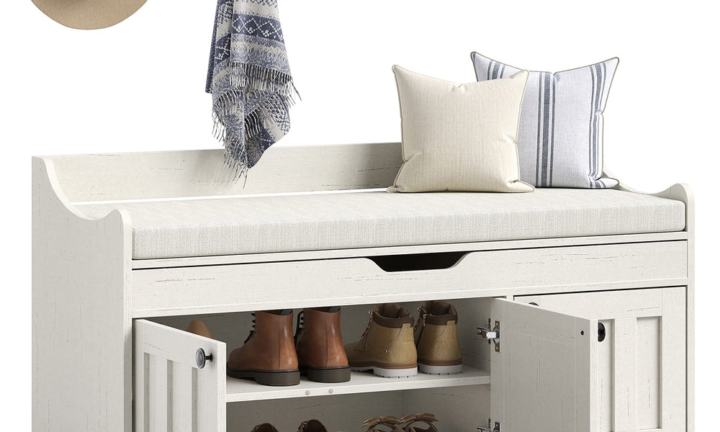
Picks for your closet & entry
Questions people ask
How do I organize a tiny closet with no shelves?
Add vertical storage that doesn't need tools. A hanging fabric organizer on the rod, a stacking shelf on the floor and hooks on the side walls cover most needs. A hang-on rod extender can add a second hanging level.
How deep should a closet be for hangers?
Plan on about 24 in. Most adult hangers are about 17 in wide, and clothes need a few inches of space on each side so they don't crush against the back wall or the door. In a shallower closet, look at a front-facing rod so hangers face the door.
How often should I edit a small closet?
A quick edit each season suits most small closets. Use the hanger flip, swap off-season clothes into storage, and let go of anything that doesn't fit or needs a repair you won't make.
Every idea in this guide on one page, to tick off as you go.
Open the printableNew guides and honest picks for every size of home. No spam. Unsubscribe anytime.