Small Entryway Shoe Storage: 11 Ideas for Tight Spaces
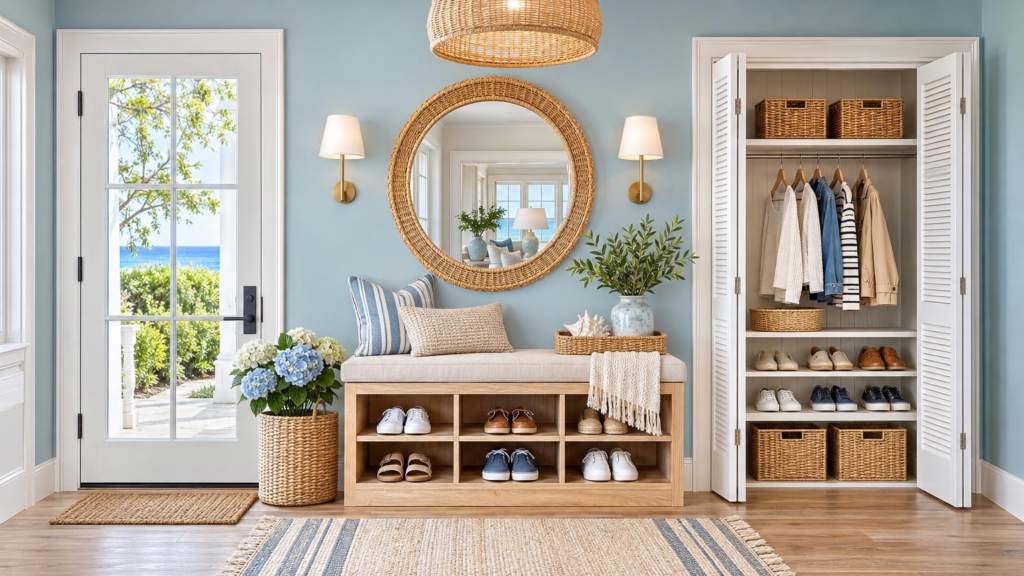
Small entryway shoe storage has one job: catch shoes at the door without blocking the door. In a tight entry, a pile of sneakers is the first thing you see and the first thing you trip on.
Start by measuring the wall space near the door and the arc the door sweeps when it opens. Note any outlets, vents or switches. Then pick the ideas that fit those numbers, not just the ones that look nice.
In this guide
- Set a pairs-per-person limit
- Keep the door swing clear
- Choose a slim tip-out cabinet
- Hang a shoe organizer on a nearby door
- Pick a bench with cubbies
- Line the wall with shoe ledges
- Go vertical in a corner
- Add a boot tray for wet shoes
- Tuck baskets under a console
- Double up with shoe stackers
- Give guest shoes a basket
- Picks for your closet & entry
- Questions people ask
Set a pairs-per-person limit
Decide how many pairs live by the door. Two or three per person is a good start: everyday shoes, a dressier pair and something for the weather.
A small entry can't hold everyone's whole shoe collection. A clear limit keeps the pile from growing back.
Count what's at your door today, then set the limit and move the rest to closets. To size shelves, plan about 8 in of width per pair of flats or sneakers, and more for boots.
Keep the door swing clear
Before you place anything, open the front door all the way and see where it stops. That arc on the floor is off-limits for storage.
Shoes or furniture in the door's path mean a door that won't fully open, scuffed walls and a cramped way in.
Many front doors are about 36 in wide, so they sweep about 36 in out from the hinge. Put a strip of painter's tape on the floor where the door stops and plan around it.
Choose a slim tip-out cabinet
A tip-out shoe cabinet stores shoes at an angle behind a front panel that tips forward. Many are under about 10 in deep.
The slant is what makes them so shallow, which suits a narrow hall. The top works as a landing spot for keys and mail.
Leave at least about 36 in of clear walkway in front of it, and check that the tip-out doors have room to open. Always anchor it to the wall. Tall, shallow furniture can tip.
Hang a shoe organizer on a nearby door
If a coat closet or bedroom door sits near the entry, an over-the-door shoe organizer turns it into a shoe wall.
Pockets or shelves hold flats, sneakers and sandals in one flat layer that takes no floor space at all.
An interior door is about 80 in tall, so a full-length organizer holds a lot. Check the gap at the top of the door so the hooks fit. Pick shelves over pockets for chunky sneakers, and keep heavy boots elsewhere.
Pick a bench with cubbies
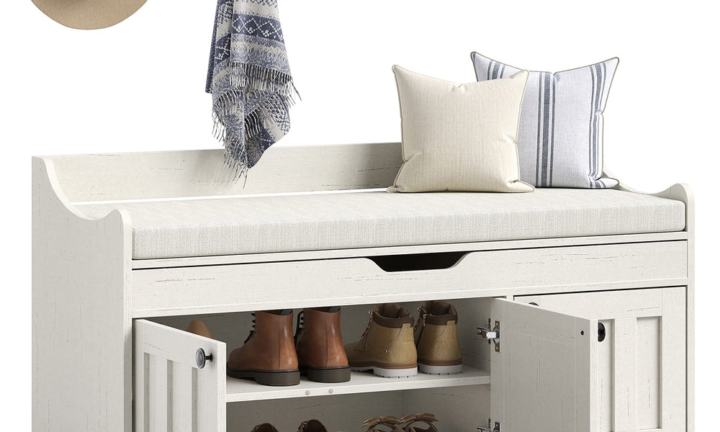
A storage bench gives you a place to sit while you pull on shoes, with cubbies or a shelf below for the pairs you wear most.
Sitting makes the routine easier, and one piece of furniture does two jobs.
A typical seat height is about 18 in. For a small entry, look for a bench about 12 to 16 in deep, and measure your tallest everyday shoe so it fits in the cubby.
Line the wall with shoe ledges
Shallow wall ledges with a front lip, like picture ledges, can hold rows of flats and sneakers off the floor.
They keep the floor open, which makes a narrow entry feel wider, and every pair is visible at a glance.
A ledge about 4 to 5 in deep holds most shoes with a little toe or heel hanging over. Space ledges about 6 to 7 in apart for flats and sneakers, and screw them into studs.
Go vertical in a corner
A narrow shoe tower or a stack of shoe shelves can fit into a corner near the door, outside the door's swing.
Corners are often dead space in an entry. Going up instead of out uses that space without narrowing your path.
Most adult shoes are about 10 to 12 in long, so a shelf about 12 in deep fits nearly all of them. Match the number of shelves to your pairs limit, and secure tall units to the wall.
Add a boot tray for wet shoes
A boot tray with a raised lip catches water, mud and road salt before they soak into floors or cabinets.
Wet shoes shouldn't go straight into a closed cabinet, where they can smell or mildew. The tray is their drying spot.
Pick a tray that holds one pair per person, and set it just outside the door swing. A few smooth stones in the tray lift shoes so air reaches the soles.
Tuck baskets under a console
A slim console table gives you a spot for keys up top, and baskets underneath can hold shoes.
Baskets hide the jumble of mismatched shoes, which matters when your entry is also part of the living room.
Console tables are often about 12 to 16 in deep and about 30 in tall. Measure the clear height under the table and choose baskets about 1 in shorter so they slide out easily.
Double up with shoe stackers
Shoe stackers, sometimes called shoe slots, hold one shoe above the other in the footprint of one.
On a shelf or in a cabinet, that roughly halves the width each pair needs, as long as the shoes are low, like flats and sneakers.
Measure the height between shelves first. A stacked pair of sneakers needs about 9 to 10 in of clearance. Skip stackers for heels and boots.
Give guest shoes a basket
If you ask guests to take off their shoes, give those shoes a landing spot: one large basket by the door.
It stops a pile from forming on your floor when friends come over, and it tucks away the rest of the time.
A basket about 18 in long holds a few pairs. Keep it in a closet or under the bench, and bring it out when company comes.
Picks for your closet & entry
Questions people ask
What can I use for shoe storage in a small entryway with no closet?
Use the wall and the space just inside the door: a slim tip-out cabinet, wall ledges or a narrow bench with a shelf. Add a boot tray for wet pairs, and keep the rest of your shoes in bedroom closets.
How deep should a shoe cabinet be?
Flat shelves need about 12 in of depth for most adult shoes. Tip-out cabinets that store shoes at an angle can be much shallower, often under about 10 in deep, which is why they work in narrow halls.
How do I keep entryway shoe storage from smelling?
Let shoes dry on a tray before they go into a closed cabinet. Don't overstuff, so a little air can move. Wipe the tray weekly, and keep a small pouch of baking soda or a cedar block in the cabinet.
Every idea in this guide on one page, to tick off as you go.
Open the printableNew guides and honest picks for every size of home. No spam. Unsubscribe anytime.