Small Living Room Storage Ideas That Keep It Cozy
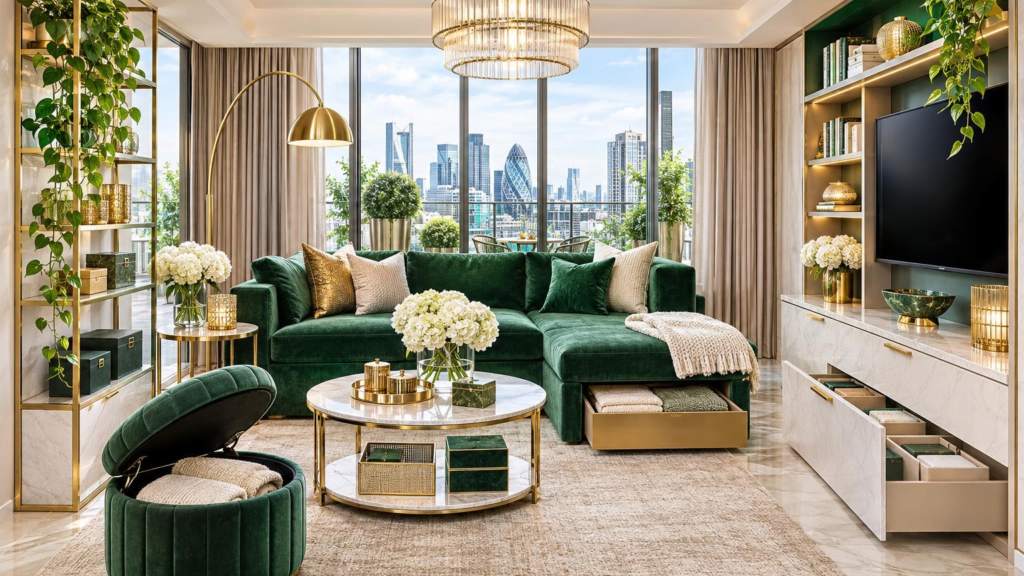
A small living room has to hold a lot. Remotes, throws, books, chargers, board games, the stuff that came in with the mail. When it has nowhere to go, it piles up, and the room stops feeling like a place to curl up.
The good news is that cozy and organized can go together. You don't need to hide everything or buy a wall of matching boxes. You need a spot for each thing, and a few soft touches so the room still feels like yours.
Here are seven ideas, in the order I'd work through them. Start with a tape measure and a roll of painter's tape. Everything else gets easier once you know your numbers.
In this guide
1. Measure and tape out the floor first
Before you buy anything, measure the wall you want to use. Run the tape along the floor, then up the wall. Write down the width, the height and how far the piece can stick out. Add inches [centimeters] to your notes so you can compare with any listing.
Next, tape the footprint on the floor. Leave about 30 in [76 cm] for a walkway, and make sure doors, drawers and cabinet fronts can open fully. A piece that fits on paper but blocks a door swing will annoy you every day.
The same trick works for a sofa, which is the biggest storage decision in the room. A reversible chaise lets you match the layout to your wall and doorway. This modular sectional is 109.5 in [278 cm] wide, 68.9 in [175 cm] deep and 31.1 in [79 cm] high, so you can tape that exact rectangle and see how much floor is left for everything else.
2. Use the corner you keep ignoring
Corners are often empty or hold a lone plant. They're one of the easiest spots to gain storage, because you aren't taking space from a wall you already use.
A rotating shelf means you don't need room to walk around it. You turn it instead. Measure the corner's depth along both walls, and check the height against any windows or vents.
A shelf with several tiers also gives you a place for books, a plant and one or two pieces of decor. A closed cabinet at the base takes what you'd rather not look at, like spare chargers or puzzle boxes.
3. Give the TV and its cords a real home
Media gear is the clutter that shows most. Consoles, game controllers, cables and streaming boxes make a wall look busy fast. A stand with enough room for all of it keeps the look calm.
Measure your TV's width first, then the wall space. The stand should be at least as wide as the TV, so it doesn't look top-heavy. Count your devices and check that the shelf depth can take them.
This boho set comes as three matching pieces with a natural, rattan-style look. It is listed as a bedroom set, but the spacious TV stand is the piece for your living room. A matched look is handy when you don't want to hunt for wood tones that agree.
4. Go up, not out
When the floor is full, use the wall. Shelves above a sofa or a desk, a narrow ledge for frames, and hooks by the door all take almost no floor space.
Keep the heaviest things low and the lightest things high. Mount shelves into studs or use the right anchors for your wall type. If you rent, check what your lease allows before you drill.
Don't fill every shelf. Leave a few gaps, and mix books with a candle, a small plant or a framed photo. Empty space is part of what makes a room feel calm.
5. Choose furniture that hides things
Look for pieces with a lid, a door or a drawer. A lift-top coffee table, a lidded ottoman or a bench by the window can hold blankets, remotes and magazines out of sight.
Use baskets with handles for what you grab every day, like throws and kids' toys. A basket looks like decor, and cleanup takes thirty seconds.
One rule keeps this working: give each basket or drawer one job. Once a drawer becomes a catch-all, you stop finding things.
6. Let the room do two jobs
In a studio or a one-bedroom with a guest, the living room may also be the office or the bedroom. A fold-away bed means the floor is open by day and the bed appears only when someone needs it.
A queen Murphy bed with a drawer and a charging station folds away, so the room can be an office or sitting space until guests arrive. The built-in drawers hold extra items in the cabinet instead of a pile in the corner. Its warm brown finish reads as furniture, not a spare bed.
Before you commit, measure the wall width and the ceiling height, then tape the open bed on the floor to see how far it reaches into the room. A queen mattress is 60 x 80 in [152 x 203 cm], so make sure that floor space is clear.
7. Add soft texture so storage feels warm
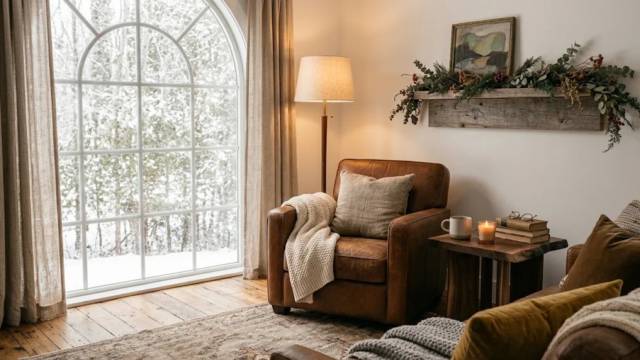
Storage can make a room feel like an office. Texture brings the warmth back. A woven basket, a wool throw or a soft rug in front of a shelf makes the whole corner feel lived in.
A single genuine sheepskin rug adds a soft spot without covering the whole floor. The listing describes a 2.5-inch wool pile and a natural pelt shape that breaks up square sofas, tables and corners. Because it is one piece, it won't crowd a small floor.
Set it near your favorite seat or by the bookshelf. Keep the rest of the floor clear, so the room still feels open.
Picks in this guide
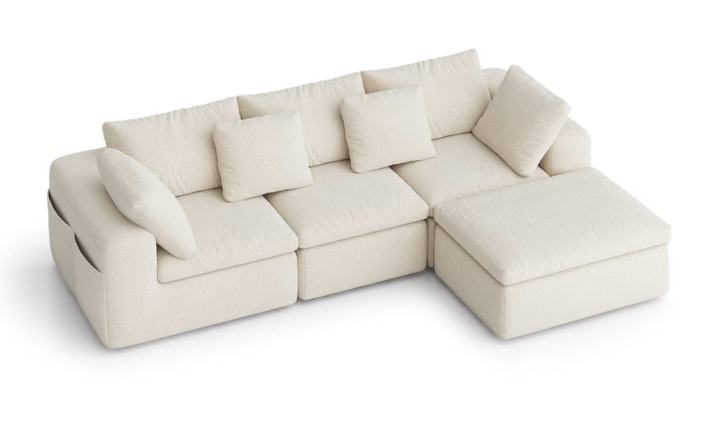 Best for planning a layout around exact measurementsModular Sectional Sofa: Put the Chaise on Either SideSee the pick
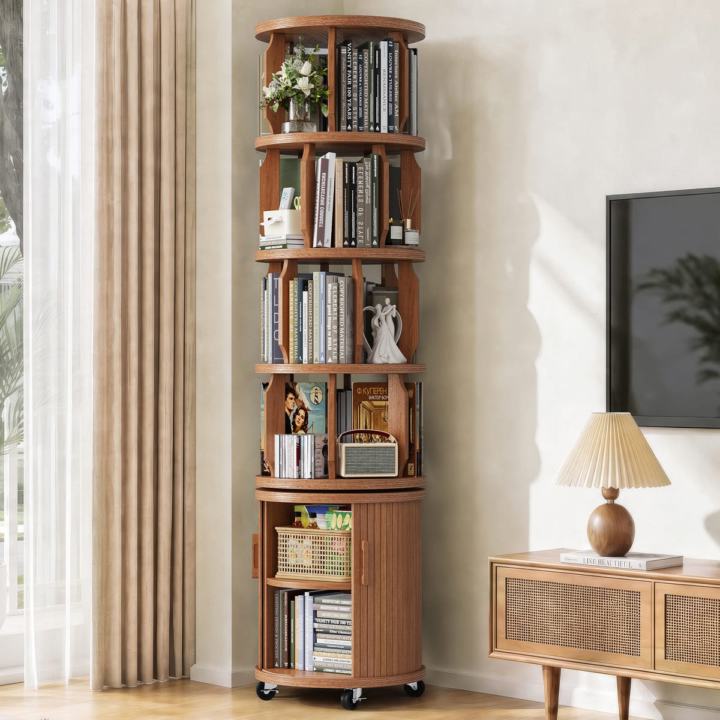 Best for a bare cornerIs a 360 Rotating Bookshelf Right for Your Corner?See the pick
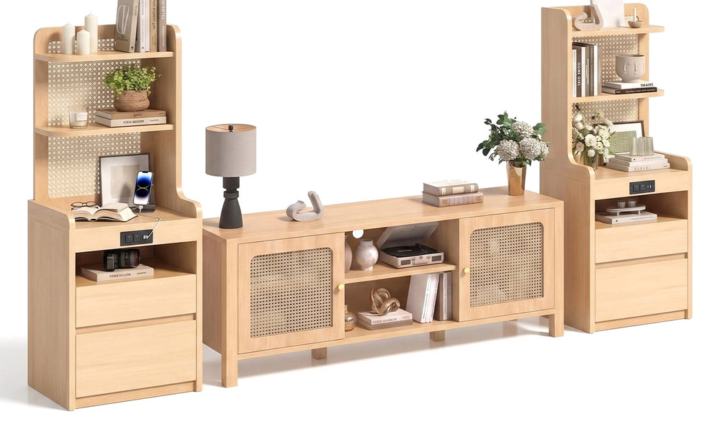 Best for hiding media gear in a matched lookA Boho TV Stand and Nightstand Set, Already MatchedSee the pick
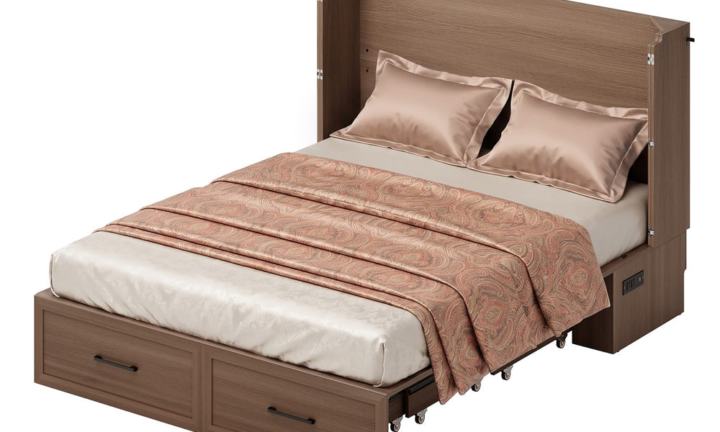 Best for a living room that hosts guestsA Queen Murphy Bed With Drawer That Frees Your FloorSee the pick
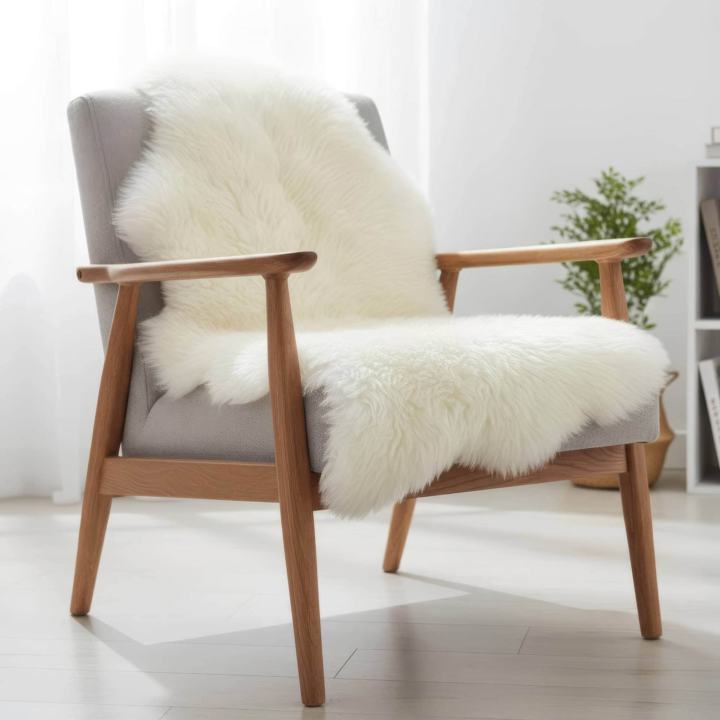 Best for adding warmth to a small floorCan a genuine sheepskin rug warm up a small room?See the pick
Questions people ask
How do I add storage without making a small living room feel crowded?
Choose pieces that use corners and walls, and keep the middle of the floor open. Tape out each footprint first. Leave a walkway of about 30 in [76 cm]. Fill only some shelves so the room can breathe.
What is the first thing to store in a small living room?
Start with whatever sits out most often, usually media gear, remotes, chargers and throws. Give those a closed spot, then look at books and decor.
How can I keep storage from looking cold or cluttered?
Mix closed storage with a few open shelves, use warm wood tones, and add texture such as baskets, wool and a soft rug. Keep one basket or drawer for one purpose.
Are corner shelves worth it in a small room?
Yes, if you have an unused corner. Measure the depth along both walls and the height first. A rotating shelf can reach every side without being moved, so it works in tight spots.
A printable checklist to measure your walls, tape out each piece, and plan storage zone by zone for a small living room.
Open the printableNew guides and honest picks for every size of home. No spam. Unsubscribe anytime.