How to choose under-sink organizers for your kitchen
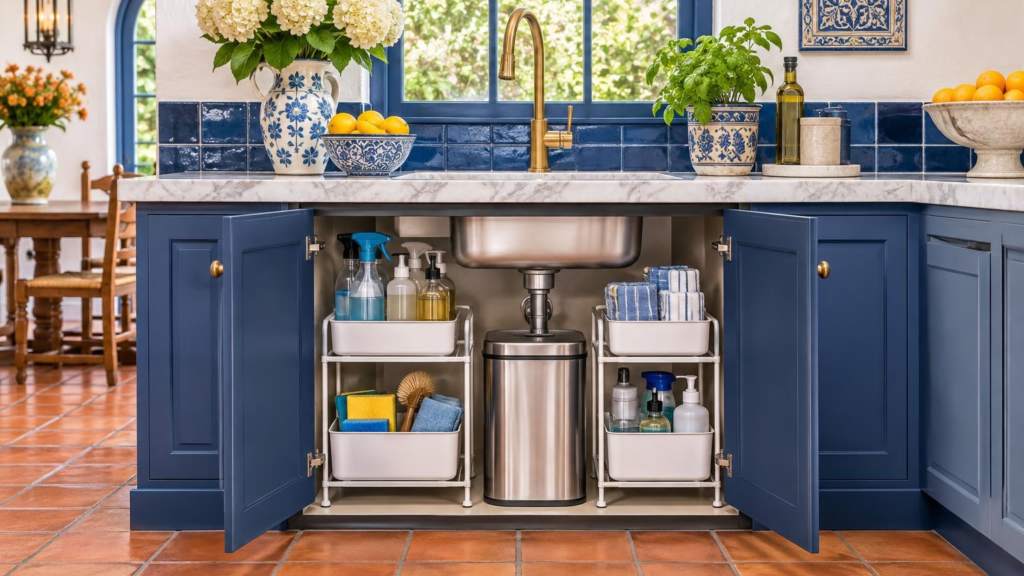
The cabinet under the kitchen sink is a tricky spot. Pipes run through the middle, the floor can get damp, and the door hides it all until something tips over.
The right organizer gives every bottle, sponge and trash bag a place. The wrong one jams against the drain and makes the cabinet harder to use than before.
So we start with the tape measure, then look at what matters, which mistakes to skip, and where to go next for the rest of your kitchen.
Measure first
- The width of the cabinet openingOpen the doors fully. Measure the narrowest point of the opening from side to side, in inches [cm]. Door hinges and frames often take up space, so don't measure only the wide inside.
- The depth, front to backMeasure from the inside of the door frame to the back wall at floor level. Then measure again higher up, because pipes and the sink bowl can shrink the depth. Write both numbers down.
- The height under the sinkMeasure from the cabinet floor up to the lowest part of the sink, the bowl or the garbage disposal. Do this on the left side, the right side and the middle, since the height is rarely the same across the cabinet.
- Where the pipes and shutoff valves sitSketch the drain pipe, the supply lines and any disposal. Measure how far each one sits from the left wall and from the front edge, in inches [cm]. This tells you which organizers will slide around them and which won't.
- The clear path through the doorCheck that the door can open fully with an organizer in place. Leave about 1 in [2.5 cm] of room at the front, so nothing catches on a hinge or the frame when you pull a drawer or bin out.
What matters
A cabinet is rarely a plain box. An organizer made for a drain in the middle, or one with a cutout or a U shape, will work better than a solid bin. Compare the product's listed inside size against your width, depth and height from the steps above. If the numbers are close, choose the one that leaves a little breathing room.
Under a sink there will be drips and the odd leak. Look for plastic, coated metal or another wipe-clean material that won't soak up water. Keep unfinished wood and plain cardboard out of this cabinet, since they swell and stain.
Pull-out drawers and sliding bins bring the back of the cabinet to you, which helps if bending is hard. Stackable shelves use the height well but can hide what's behind them. Think about what you grab every day, such as dish soap and sponges, and give those the easiest spot.
Full bottles of cleaner and a heavy box of dishwasher pods add up quickly. Check any weight limit on the product's own page before you load it. Put the heaviest things low and close to the cabinet floor.
Mistakes to avoid
- Measuring only the inside width and skipping the door opening, so the organizer won't go in at all.
- Forgetting the garbage disposal or the shutoff valves, which can block a drawer from sliding all the way out.
- Buying a tall organizer without checking the height at the lowest point under the sink bowl.
- Choosing a material that soaks up water or rusts, then watching it warp or stain after the first drip.
- Filling every inch. Leave a little space so you can reach the shutoff valves fast if something leaks.
- Keeping things you don't use. Sort out old sponges, half-empty bottles and odd bags before you buy, so you only pay for the storage you need.
Our picks by need
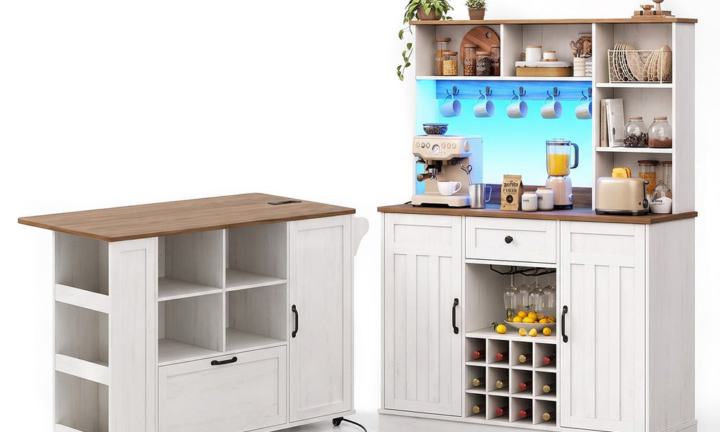 Best for moving bulky things out of the sink cabinetKitchen Island With Coffee Bar: Will Two Pieces Fit?See the pick
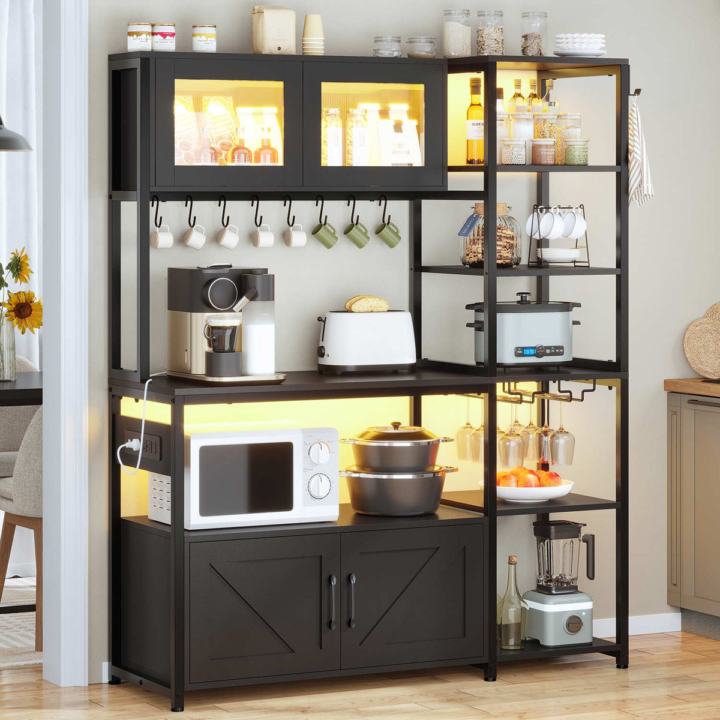 Best for giving mugs and coffee supplies their own homeA coffee bar with power outlet, right where the mugs areSee the pick
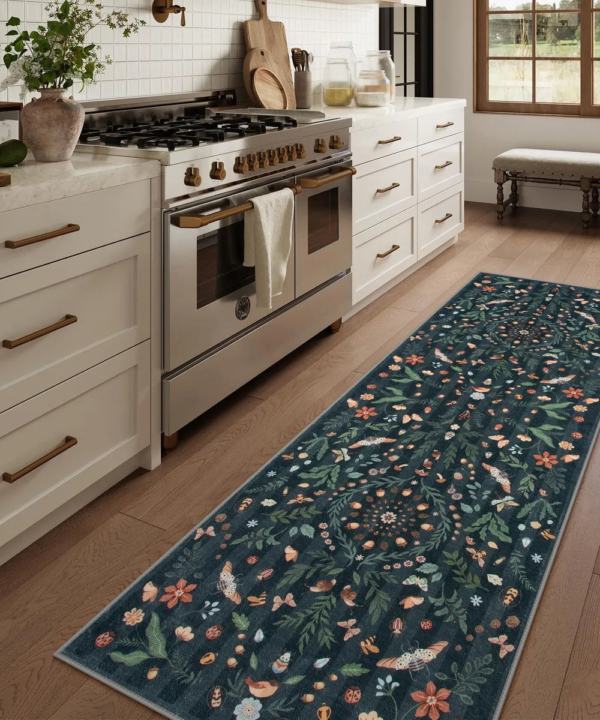 Best for a washable spot to stand at the sinkWashable kitchen runner rug: spills go in the washCompare the picks
Questions people ask
How do I organize under the kitchen sink with pipes in the way?
Map the pipes first. Measure where the drain and supply lines sit, then choose an organizer with a cutout or two smaller pieces that sit on either side. Use the open space around the pipes for tall bottles.
Should I choose pull-out drawers or stackable shelves?
Pull-out drawers bring the back of the cabinet forward and suit deeper cabinets. Stackable shelves use the height well and suit shorter items. If the cabinet is cramped around the plumbing, a mix of both can work.
What should I keep under the kitchen sink?
Daily cleaning supplies, sponges, dish soap, trash bags and a small bin for spare items work well. Keep anything that is hurt by damp, like paper towels, in another cabinet. Store household chemicals out of reach of children and pets.
How much room should I leave around an organizer?
Leave about 1 in [2.5 cm] at the front so the door closes, and keep clear access to the shutoff valves. Don't force an organizer into a tight spot, because you may not be able to take it out again.
Where can I put the things that don't fit under the sink?
Look for other kitchen storage, like a cabinet in a kitchen island or an open shelf unit. That way the sink cabinet only holds what you use around the sink.
A printable checklist for measuring your sink cabinet, noting the pipes and valves, and comparing organizer sizes before you buy.
Open the printableNew guides and honest picks for every size of home. No spam. Unsubscribe anytime.