Under Sink Organization: 11 Ideas That Work Around the Pipes
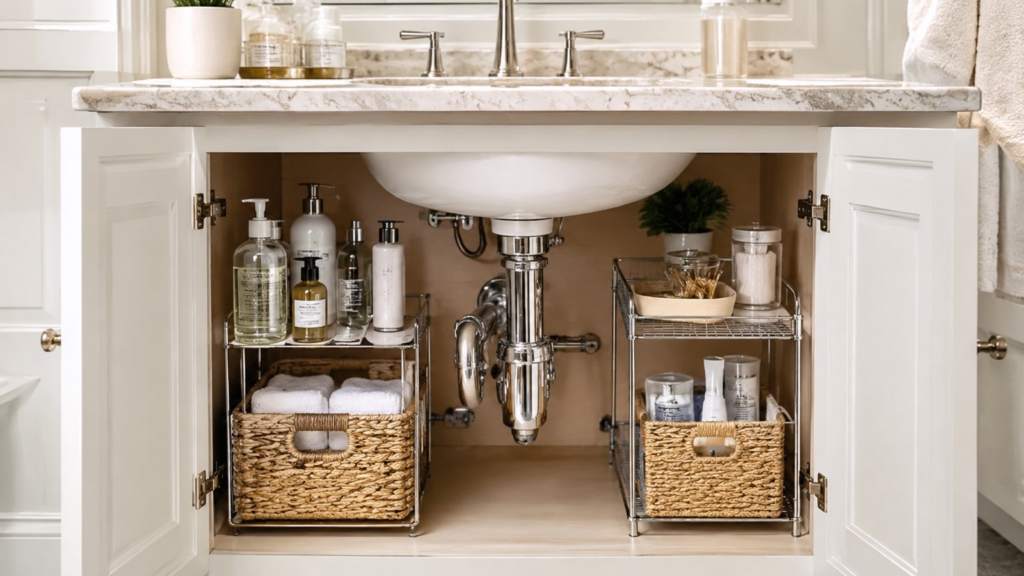
Under sink organization is tricky because the space isn't really a box. Pipes, a drain trap, two shutoff valves and maybe a disposal all claim part of it, and what's left is an odd shape.
So start by emptying the cabinet completely. Wipe it down, look for drips, then measure what's actually usable. Most kitchen sink cabinets are about 24 in deep and often 30 to 36 in wide. The ideas below work with the plumbing, not against it.
In this guide
- Map the pipes before you buy
- Line the floor first
- Add a two-level shelf around the trap
- Hang spray bottles from a tension rod
- Use long bins as drawers
- Keep trash bags in the can
- Hook gloves and brushes on the side walls
- Install a pull-out basket
- Keep the shutoff valves clear
- Group by task and lock up chemicals
- A note for the bathroom vanity
- Picks for your kitchen
- Questions people ask
Map the pipes before you buy
Sketch the cabinet from the front and from above. Mark the drain, the trap, the supply lines, the shutoff valves and any disposal.
Most under-sink frustration comes from organizers that don't fit around the plumbing. A rough sketch with numbers saves you a return trip.
Measure the inside width and depth, the height to the bottom of the trap, and the clear zone on each side. Measure the door opening, too. The face frame often makes it a few inches narrower than the inside.
Line the floor first
A waterproof cabinet liner or a shallow tray with a raised edge protects the cabinet floor from slow drips and spilled cleaner.
Sink cabinet floors are often particleboard, which swells when it gets wet. A liner holds the water, so you spot a leak before it damages the base.
Measure the floor at its narrowest point, usually at the front. Look for a lip at least about 1/2 in tall, and lift the liner to check under it now and then.
Add a two-level shelf around the trap
A U-shaped shelf, or a pair of small two-level units on either side of the drain, gives you upper and lower storage.
You can't add a normal shelf under a sink, because the pipes run right through the middle. A shelf built to go around them gets you a second level anyway.
Measure the clear width on each side of the trap and the height to the lowest pipe. If you pick an adjustable unit, set the top tier so it clears the trap by about 1 in.
Hang spray bottles from a tension rod
Fit a tension rod across the cabinet, up high, and hang spray bottles by their triggers.
It uses the empty height near the top of the cabinet and frees the floor for bins. You can also see every bottle at once.
Set the rod a few inches below the countertop, just behind the face frame. Most spray bottles need about 10 in of space below the rod. Measure wall to wall inside and pick a rod that adjusts to that span.
Use long bins as drawers
Narrow, deep bins slide in from the front and pull out like drawers. Use one for dish soap and sponges, one for cleaning, one for refills.
In a deep, dark cabinet, bins keep things from getting lost in the back. You pull out one bin instead of reaching past everything.
Measure from the back of the face frame to the pipes, then choose bins about 1 in shorter. A front handle helps, and clear sides let you see what's inside.
Keep trash bags in the can
Store the roll of trash bags in the bottom of the trash can itself, under the bag in use.
That's one less thing crowding the sink cabinet, and the next bag is right there when you take out the trash.
Check that the roll sits flat in the base and that the new bag still opens fully over it. If your can has a removable inner bucket, the roll can sit under the bucket instead.
Hook gloves and brushes on the side walls
The inside side walls of a sink cabinet are usually bare. A few hooks there can hold rubber gloves, a scrub brush or a small dustpan.
Damp things dry better hanging than lying in a bin, and the cabinet floor stays free.
Keep hooks in the front few inches of the wall so they miss the pipes, and away from the hinges. Pick hooks made for damp spots, and let gloves drip-dry over the sink before you hang them.
Install a pull-out basket
A wire or wood basket mounted on runners turns the deep cabinet floor into a drawer.
No more kneeling and reaching past the trap. The back of the cabinet slides out to you.
Measure the narrowest part of the door opening, not the inside width, because the basket has to slide through it. Check that the runners clear the hinges. This takes a drill, so renters should ask first.
Keep the shutoff valves clear
Whatever you store, the shutoff valves and the disposal's plug or switch must stay easy to reach.
If a supply line leaks, you want the water off in seconds, not after you dig past every bottle.
Leave about 6 in of open space in front of each valve so your hand fits. If your disposal plugs into an outlet under the sink, keep that outlet clear and dry too.
Group by task and lock up chemicals
Sort what's under the sink into a few groups: dishes, cleaning and refills. Give each group one bin or one side.
You grab one bin for the job, and you're less likely to buy a bottle of something you already have.
If kids or pets live with you or visit, add a childproof latch to the doors or move strong cleaners up high. Keep a small leak kit at the front: a towel, a sponge and a flashlight.
A note for the bathroom vanity
The same rules work under a bathroom sink, with a few changes. Vanities are often shallower, about 18 to 21 in deep, so measure before you reuse kitchen organizers.
Use small bins for hair, skin care and backups. A hook on the side wall can hold a hair dryer. Let hot tools cool fully before they go in the cabinet.
No cabinet at all? Under a pedestal sink, a fabric skirt attached with hook-and-loop tape can hide a small bin. Measure the space around the pedestal first.
Picks for your kitchen
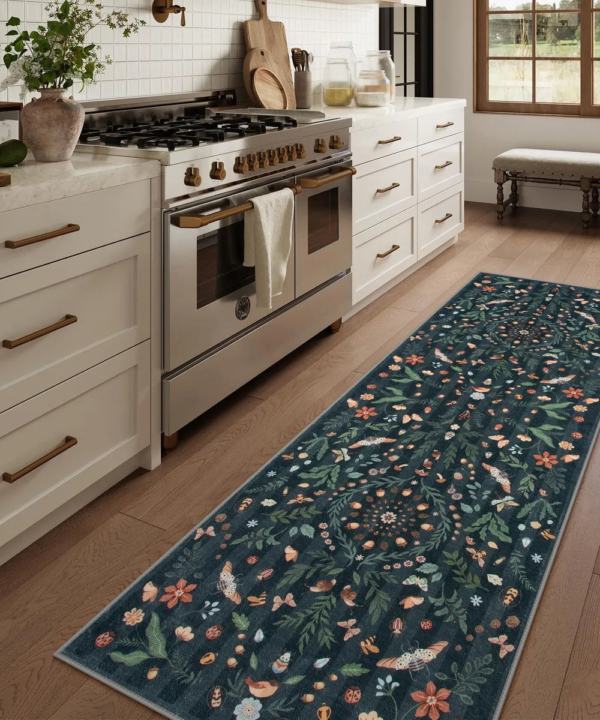 Our pickWashable kitchen runner rug: spills go in the washCompare the picks
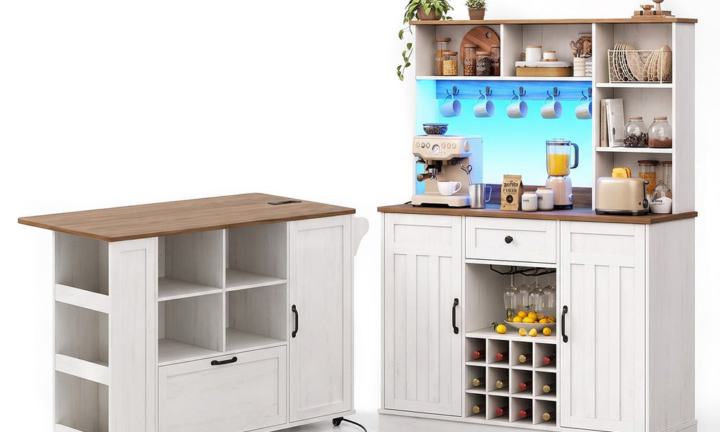 Our pickKitchen Island With Coffee Bar: Will Two Pieces Fit?See the pick
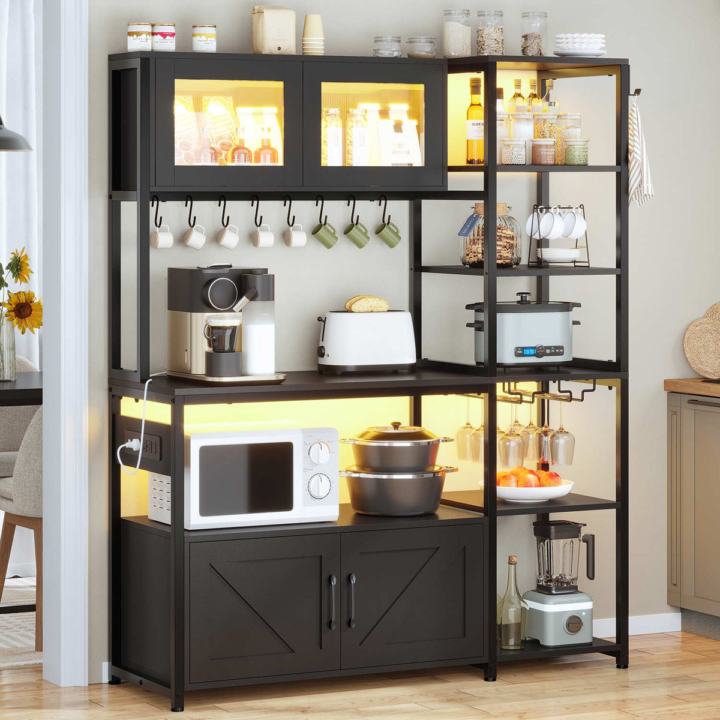 Our pickA coffee bar with power outlet, right where the mugs areSee the pick
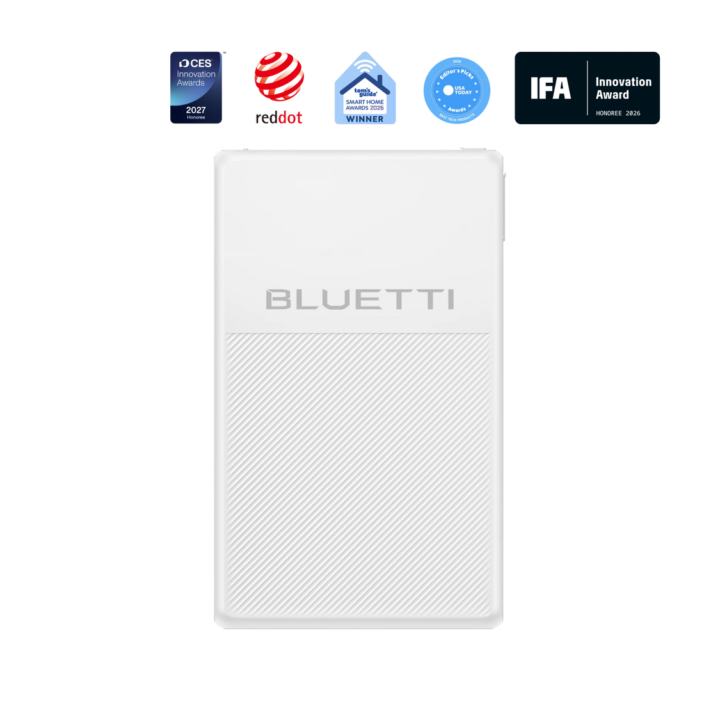 Our pickRefrigerator battery backup that slides behind your fridgeSee the pick
Questions people ask
What should not be stored under the kitchen sink?
Skip anything that hates moisture, like open paper goods, food or electronics. Be careful with strong chemicals if kids or pets are around. Never keep products that shouldn't mix, like bleach and ammonia cleaners, together in one open bin.
How do I organize under a sink with a garbage disposal?
Work around it. Use the space on each side with narrow bins or a two-level shelf, and keep tall items away from the disposal body. Leave its outlet or switch clear and easy to reach.
How often should I check under the sink for leaks?
A quick look about once a month is a good habit. Feel the bottom of the trap and the supply lines, check the liner for water marks, and press the cabinet floor for soft spots.
Every idea in this guide on one page, to tick off as you go.
Open the printableNew guides and honest picks for every size of home. No spam. Unsubscribe anytime.