12 Small Kitchen Storage Ideas That Use Every Inch
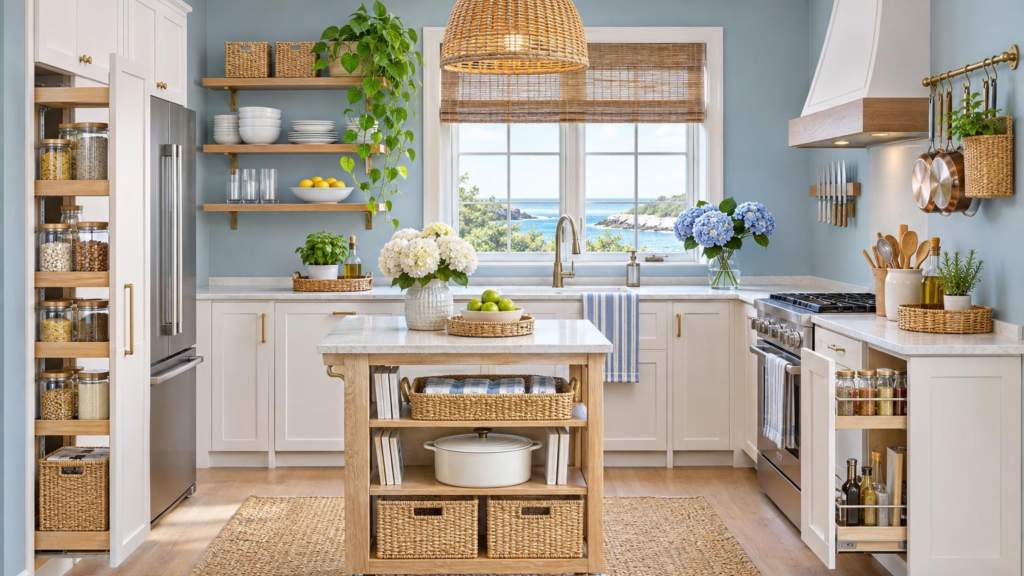
These small kitchen storage ideas start with a tape measure. A small kitchen usually has more room than it shows. It hides in gaps, on doors, up high, and inside cabinets that hold one layer when they could hold two.
Before you buy anything, measure three spots: the gap beside your fridge, the clear height inside your cabinets, and the space between your upper cabinets and the ceiling. Save the numbers in your phone. Every idea below gets easier once you know them.
In this guide
- Roll a slim cart into the fridge gap
- Add shelf risers inside cabinets
- Put the inside of cabinet doors to work
- Turn the pantry door into a pantry
- Decant dry goods into square containers
- Use the space above your upper cabinets
- Hang a rail under the upper cabinets
- Stand pans and boards up like files
- Put a turntable in the corner
- Divide deep drawers
- Use the side of your end cabinet
- Hang produce in a tiered basket
- Picks for your kitchen
- Questions people ask
Roll a slim cart into the fridge gap
Many kitchens have a dead strip beside the fridge or between the counter and a wall. A slim rolling cart turns it into a pantry for cans, spices and oils.
It works because it uses depth you already have. Base cabinets are about 24 in deep, and a cart that runs that deep holds a lot while showing only a few inches of front.
Measure the gap at the floor and again at counter height, since walls aren't always straight. Many slim carts are about 5 to 6 in wide. Leave a little wiggle room so it rolls out without scraping.
Add shelf risers inside cabinets
Cabinet shelves are often spaced for tall things, so a short stack of plates leaves empty air above it. A shelf riser adds a second level in that air.
You can't add cabinets to a small kitchen, but you can add layers. Mugs go on top, plates below. Or bowls over saucers.
Measure the clear height of the shelf, then subtract your tallest stack. If about 6 in or more is left over, a riser earns its spot. Upper cabinets are about 12 in deep, so pick risers no deeper than about 11 in.
Put the inside of cabinet doors to work
The back of a cabinet door is flat, hidden and almost always empty. Small hooks or a slim rack can hold measuring spoons, pot holders or a thin cutting board.
It frees drawer space for bigger tools. And the things you grab most are right there when the door opens.
Close the door slowly and notice how close it comes to the shelf edges. Whatever you hang needs that much clear space, often only about 1 to 2 in. If the shelves sit tight to the door, stick to flat things like adhesive hooks for spoons.
Turn the pantry door into a pantry
If you have a pantry, closet or broom closet door nearby, an over-the-door rack with shallow baskets can hold spices, snacks, foil and wraps.
A standard interior door is about 80 in tall. Even a narrow rack gives you several feet of shelves that take zero floor space.
Check the gap at the top of the door first. The hooks need to slip through it and the door still has to close. Measure the door's width, too. Common widths run from about 24 to 36 in.
Decant dry goods into square containers
Pasta, rice, oats and flour take up less room in square or rectangular containers than in bags and odd-shaped boxes.
Square shapes sit edge to edge with no wasted curves. Clear sides show you when you're running low, so you're less likely to buy a duplicate.
Measure shelf depth and height before you choose sizes. On a 12 in deep upper shelf, two rows of containers about 5 to 6 in deep fit front to back. Label the front and the lid.
Use the space above your upper cabinets
With 8 ft ceilings and 30 in upper cabinets, there's often a gap of about 12 in between the cabinet tops and the ceiling. It usually holds nothing but dust.
It's a good home for things you use a few times a year: the roasting pan, holiday platters, the big stockpot.
Use matching lidded bins or baskets so it looks calm from below. Choose bins about 1 in shorter than the gap so you can tip them out. Keep a step stool close.
Hang a rail under the upper cabinets
A metal rail along the backsplash, with S-hooks, holds ladles, whisks, mugs or a small herb pot. A magnetic knife strip does the same job for knives.
It clears out crowded drawers and the counter, and the tools you use daily hang within reach of the stove.
The backsplash between the counter and the uppers is usually about 18 in tall. Mount the rail about 4 in below the cabinets so long tools don't drag on the counter. If you rent, ask before drilling, or use adhesive hooks rated for the weight.
Stand pans and boards up like files
Sheet pans, baking dishes, cutting boards and pot lids stack badly. Stand them on edge instead, with a divider rack or a couple of tension rods in the cabinet.
You can slide out the one you need without lifting everything on top of it. They also take up less floor space in the cabinet.
A half sheet pan is about 18 by 13 in. Run the long side front to back and it fits in a base cabinet, which is about 24 in deep. Check you have at least about 14 in of clear height under any shelf, and leave about 1 in between slots for your fingers.
Put a turntable in the corner
Corner cabinets swallow things. A turntable, also called a lazy Susan, brings the back of the shelf to the front with one spin.
Oils, vinegars, sauces and spice jars all fit well. Nothing gets lost behind something else.
Measure the shelf depth and the door opening, which is often narrower than the inside. In a 12 in deep upper cabinet, a turntable about 10 in across fits. A base corner cabinet can often take one about 16 to 18 in across.
Divide deep drawers
Deep base drawers turn into a jumble of pots and food containers fast. Adjustable dividers, or a drawer insert with movable pegs, give each item its own zone.
When everything has a set spot, the drawer holds more without jamming, and you can see it all from above.
Measure the inside of the drawer, not the front. Base drawers often have about 20 to 21 in of inside depth. Nest food containers by size, store lids on edge beside them, and keep only as many as fit.
Use the side of your end cabinet
The exposed side of the cabinet at the end of a run is often blank. A shallow spice rack, a paper towel holder or a few hooks for dish towels can live there.
It's storage that barely sticks out, which matters in a galley kitchen where you share a narrow aisle with the oven door.
A base cabinet side gives you about 24 in of width to work with, and an upper about 12 in. Keep anything you mount about 3 in deep or less so hips and bags don't catch on it.
Hang produce in a tiered basket
A fruit bowl or a pile of produce can eat a whole corner of counter. A hanging tiered basket holds the same food stacked up instead of spread out.
In a small kitchen, counter space is work space. Moving produce up gives you back room to chop.
Hang it from a ceiling hook screwed into a joist, over a counter corner with no upper cabinet above. Keep the bottom tier a few inches above the counter so you can wipe under it. Don't hang it over the stove.
Picks for your kitchen
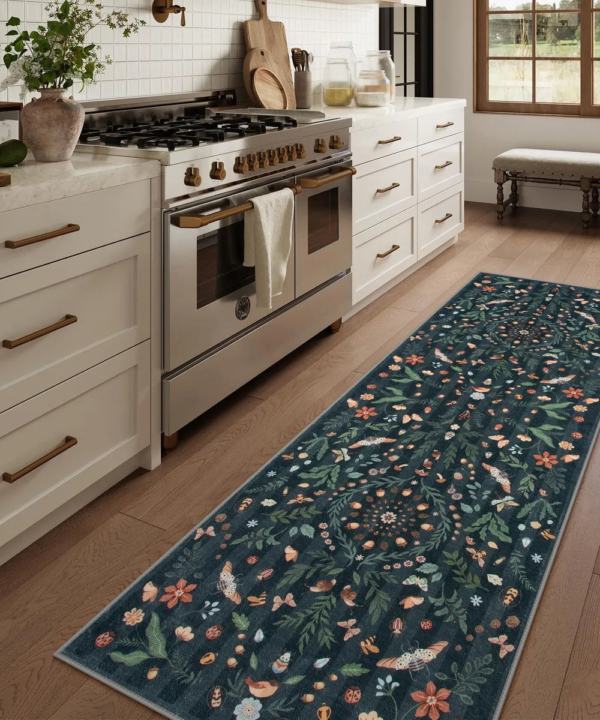 Our pickWashable kitchen runner rug: spills go in the washCompare the picks
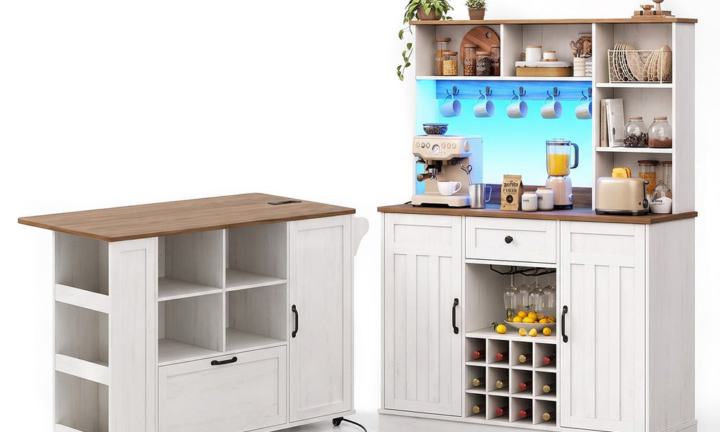 Our pickKitchen Island With Coffee Bar: Will Two Pieces Fit?See the pick
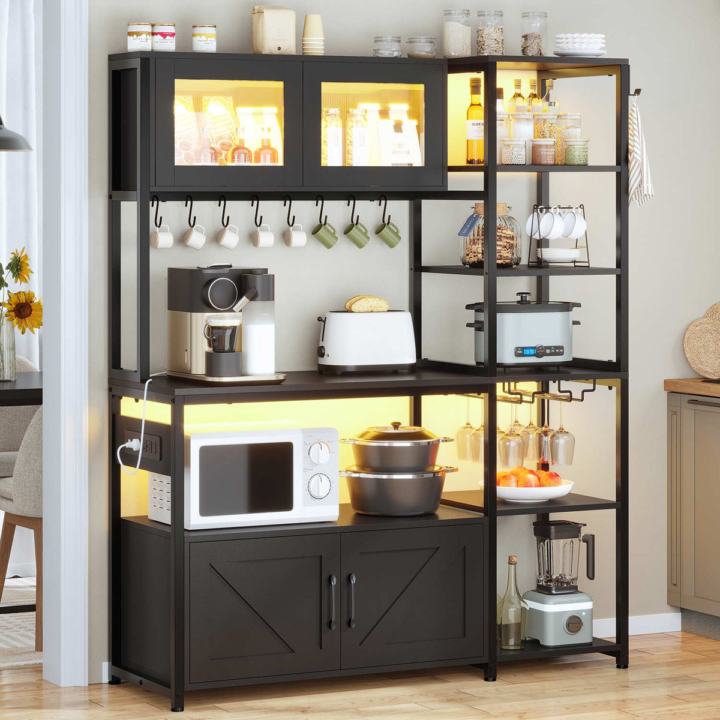 Our pickA coffee bar with power outlet, right where the mugs areSee the pick
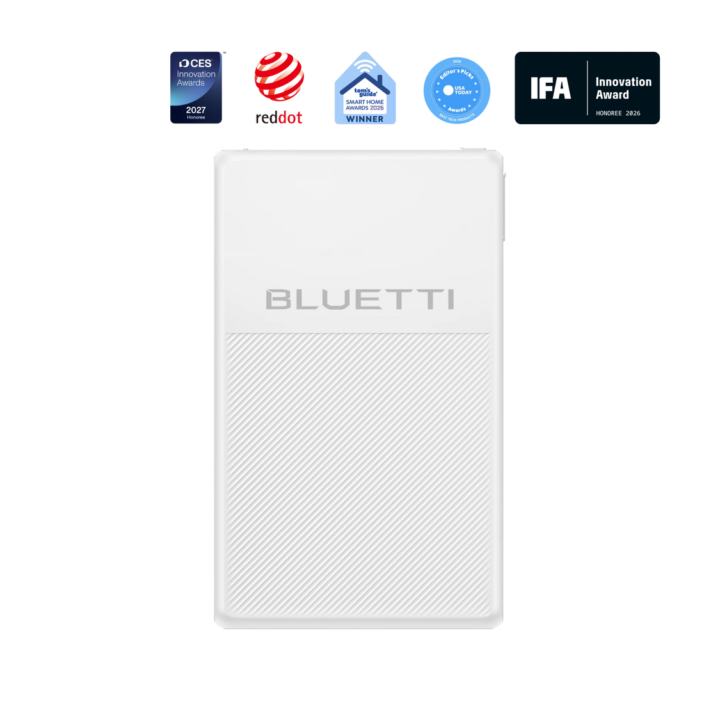 Our pickRefrigerator battery backup that slides behind your fridgeSee the pick
Questions people ask
What is the best storage for a small kitchen with no pantry?
Build a pantry from parts. A slim cart in the fridge gap, an over-the-door rack on a nearby closet door, and one upper cabinet of square containers can cover most dry goods. Keep backstock to one bin so you always know what you have.
How can I add kitchen storage in a rental?
Stick to things that come out cleanly: shelf risers, turntables, tension rods, over-the-door racks, rolling carts and adhesive hooks rated for the weight. Ask your landlord before drilling into walls or cabinets, and save any hardware you remove.
Where should heavy items go in a small kitchen?
Keep heavy pots, cast iron and small appliances low, in base cabinets or deep drawers. Save high spots for light things you rarely use. It's safer for you, and it keeps upper shelves from sagging.
Every idea in this guide on one page, to tick off as you go.
Open the printableNew guides and honest picks for every size of home. No spam. Unsubscribe anytime.